

Your appointment companion · Printable question card
Your appointment question card
A good appointment question card fits on one page: your pet’s basics, what changed and when, current medications and diet, your questions in priority order, and space for the vet’s answers.
 By Maya Ellison, Founder and writer · 2 min read · Published · Updated
Before the conversation
A good appointment question card fits on one page: your pet’s basics, what changed and when, current medications and diet, your questions in priority order, and space for the vet’s answers. Gather your pet’s recent history before you pick up a pen.

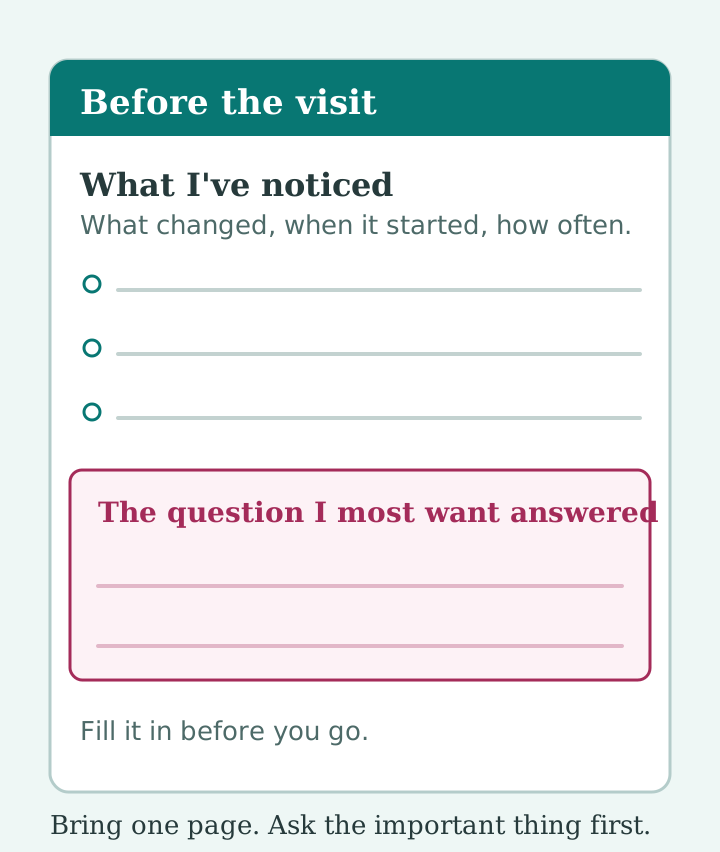
Start with a timeline. When did the change start? Has it changed, gotten worse, or come and gone? Record what you observed, without trying to diagnose it. If your clinic provides a pre-visit questionnaire, use its questions to guide the details you gather.
Pull together the practical details too:
- Current medications and supplements, including dose and timing
- Diet, treats, and any recent food changes
- Weight trends, if you track them at home
- Past test results or records from another clinic, if this is a new vet
Rank your questions by importance and put the one you most want answered first, so it gets asked even if the visit runs short.
How do you turn a worry into a clear question?
Sometimes a visit starts with a feeling more than a question. A little shaping helps it get a useful answer.
Try this three-step rewrite at the kitchen table:
- Write the worry in your own words, however loose it sounds.
- Add the observation behind it: what you saw, when, and how often.
- Finish with what you hope to learn, such as options, next steps or signs to watch.
Here is a worked example. A loose note like “he seems off” becomes “He has left part of his breakfast four mornings this week. What could we check, and what should I watch at home?” Your vet can start working with that second version straight away.
What to put on the card
A printable question card can be one page you fill out by hand the night before or morning of the visit. Keep the format simple: short fields, plenty of blank space, and room to jot answers during the appointment itself.
Structure the card in sections:
Pet and visit basics
Name, age, weight, reason for visit, date symptoms started.
Observations
What changed, how often it happens, anything that makes it better or worse.
Current medications and diet
Name, dose, frequency, and how long your pet has been on each one.
Your questions
Leave three to five lines blank. Number them in priority order so the most pressing question gets asked first even if time is tight.
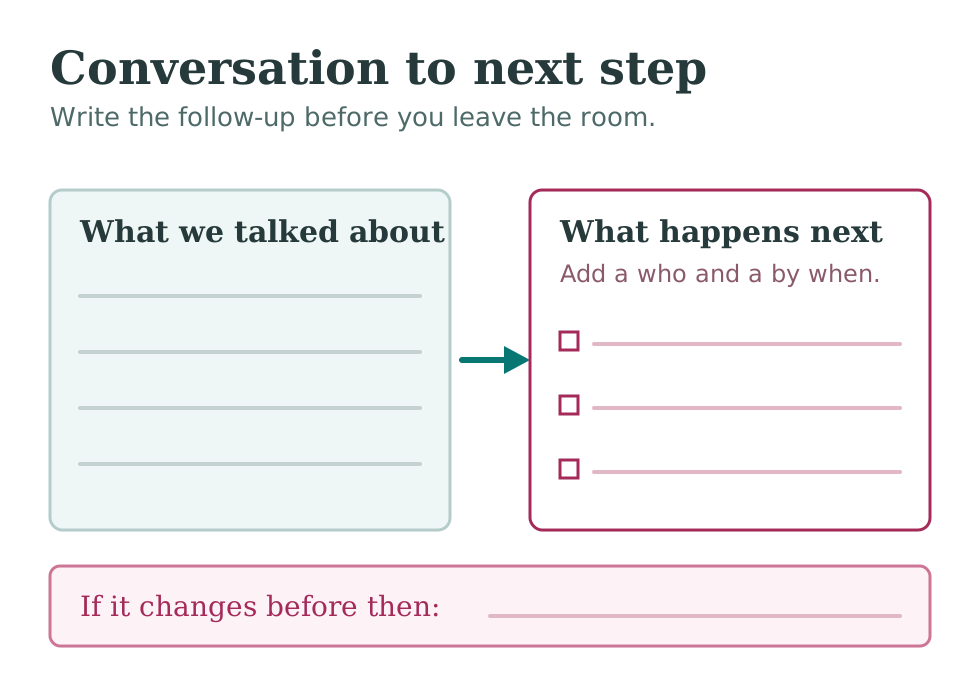
Notes during the visit
A blank block at the bottom for what the vet says, so you’re not relying on memory afterward.
Which slips make a question card harder to use?
Most card trouble comes from good intentions, and each fix takes a minute or two.
| Common slip | Easy fix |
|---|---|
| Ten questions squeezed onto one card | Keep your top three on the front and park the rest on the back |
| Guesses written as facts | Label a guess as a guess, on its own line |
| Dates left as “a while ago” | Scroll back through your phone photos to find the first day you noticed |
| Card forgotten on the counter | Take a photo of it the night before as a backup |
Before you leave
Scan your card one last time before you walk out the door. Check that every question has an answer, or a note on why it’s being deferred to a follow-up call or a future visit.

Then check these specifics on your card:
- Medication name, dose, and how long to give it
- Any signs that would mean calling the clinic sooner than the next scheduled visit
- Whether test results will come by phone, portal, or a follow-up appointment
- Date of the next recommended visit, if one was mentioned
Keep the completed card. Stack it with past visit notes, medication records, and test results so the next appointment starts from where this one left off, instead of from scratch.
Questions readers ask
What should I write down before a vet appointment?
Write your pet's basics, what changed and when it started, current medications with doses, diet and treats, and your questions ranked by priority. Leave a clear space for answers. One page is plenty, and filling it in the night before keeps the morning calm and unhurried for you and your dog.
How many questions can I bring to a vet visit?
Bring as many as you like on paper, then star the three that matter most. Ask those first so they get full attention. If time runs short, ask whether the others suit a follow-up call or the next visit. An organized list tends to make the whole conversation smoother.
Is it okay to take notes during a vet appointment?
Yes, and it is a lovely habit to build. Jot short phrases so you can keep listening. Ask the team to repeat a medication name or dose if you miss it. A quick read-back at the end, like “so we start tonight,” confirms you both heard the same plan.
Should I bring records from a previous vet?
When you are visiting a new clinic, earlier records give the team a fuller picture from the first minute. Ask your previous clinic to send them ahead, and keep your own copy in a folder. Note any past test results on your card so you can point to them quickly.